FQC Inspection Overview
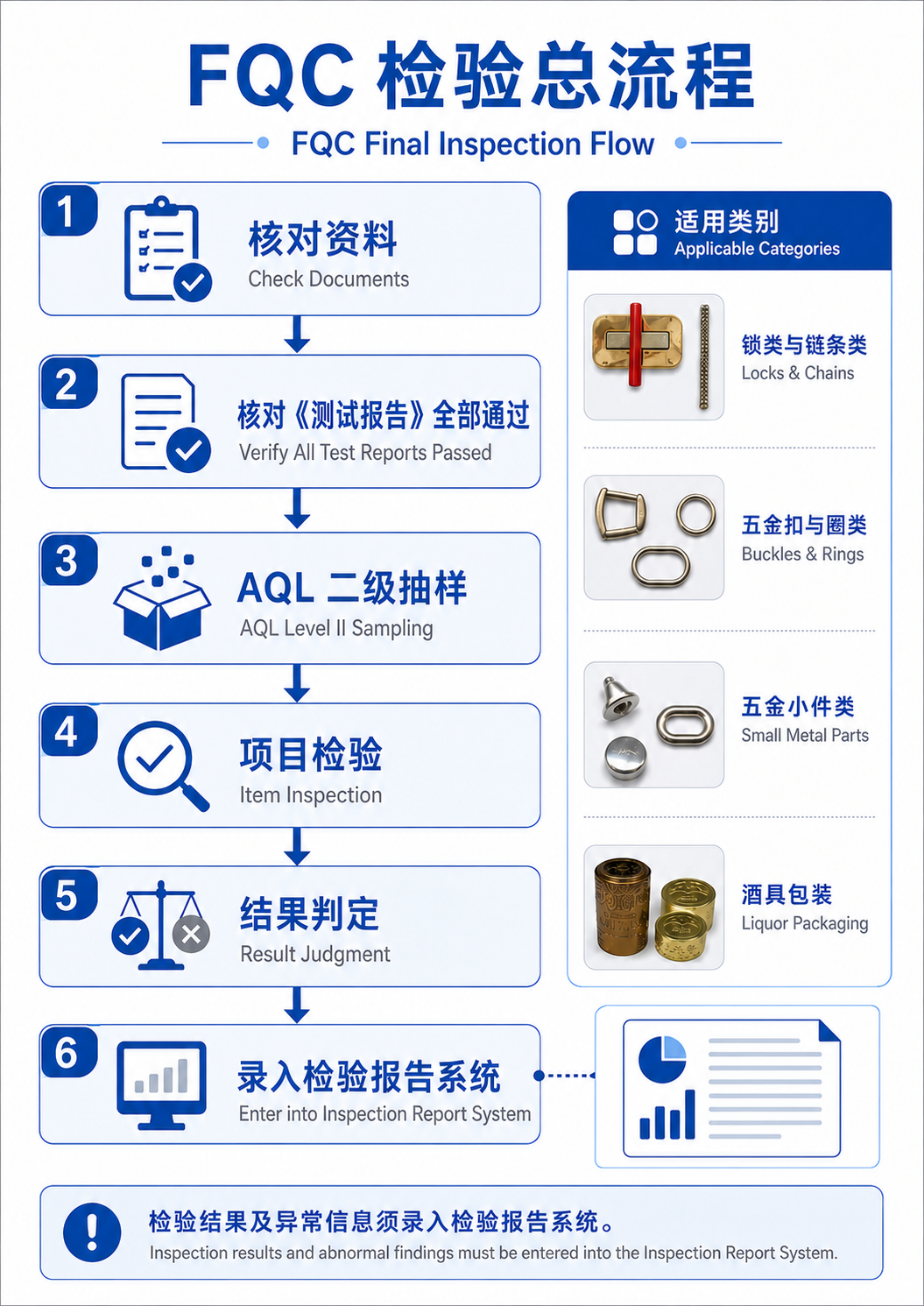
FQC is the final inspection before a completed lot is released. Check the relevant documents and samples, record the findings, and release the lot only when the acceptance criteria are met. If a problem appears, hold the lot before proceeding.
1. Check the basis
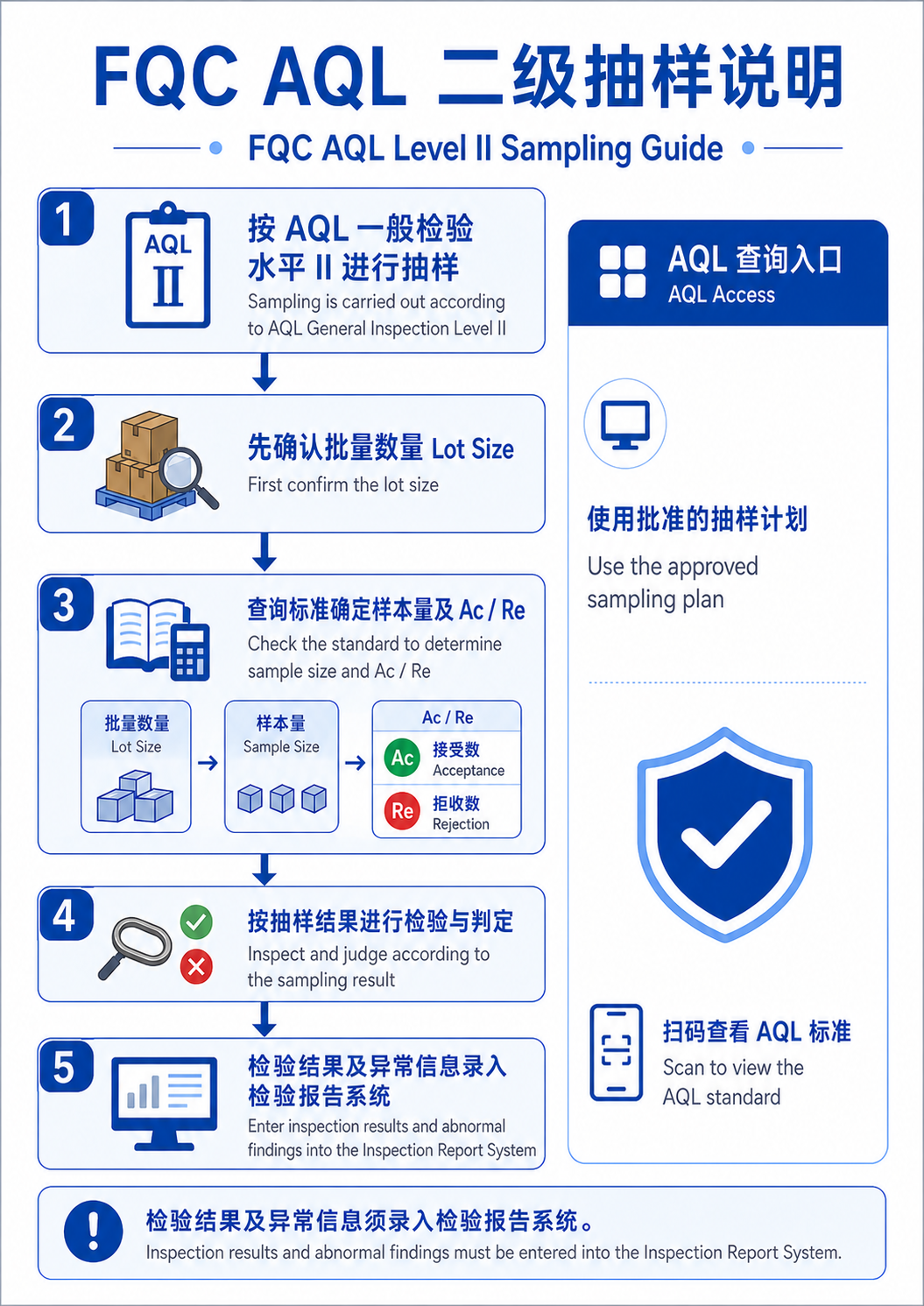
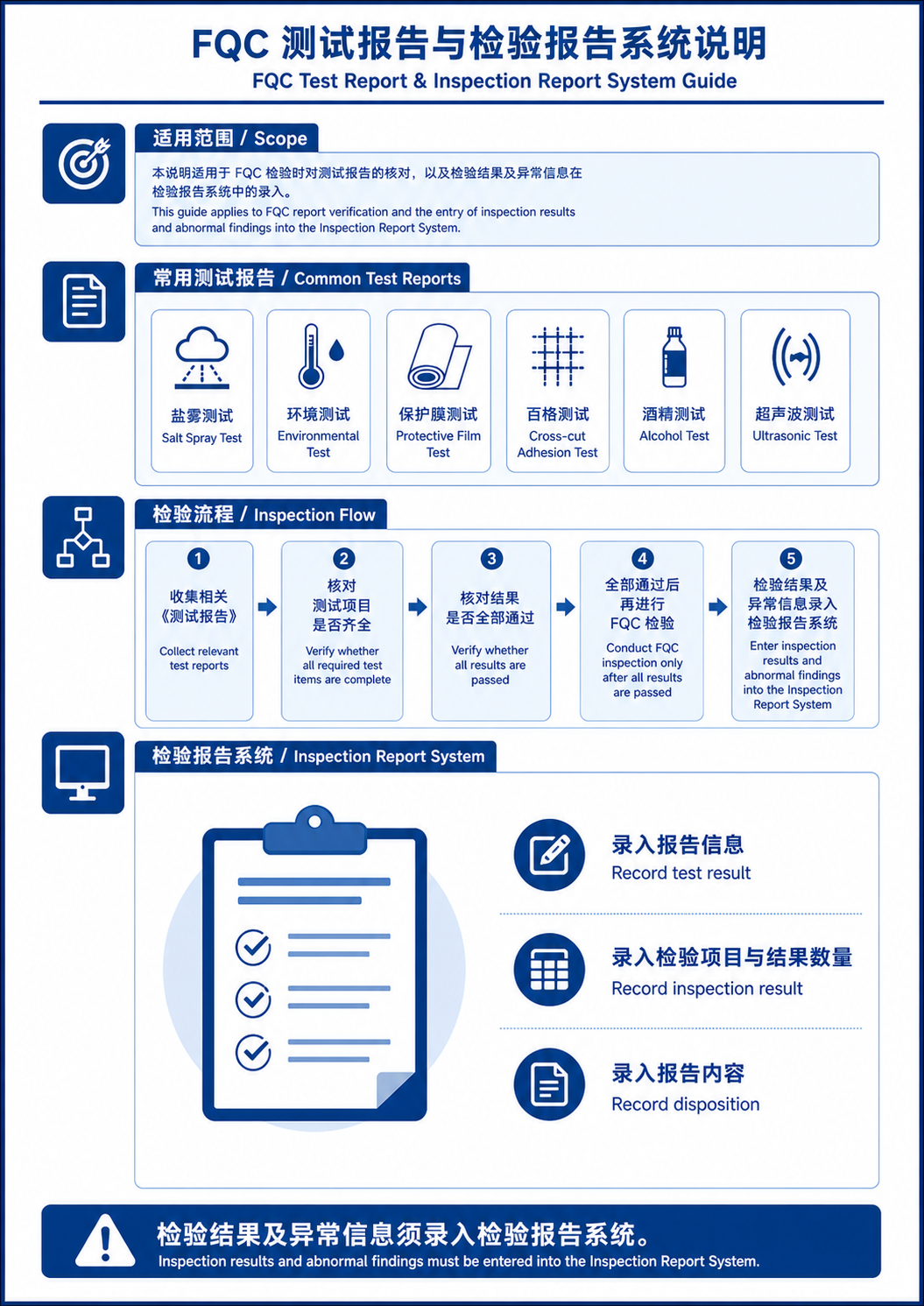
Section titled “1. Check the basis”Confirm the product revision, lot size, drawing, approved sample, packing requirement and required test reports. Record the sampling level, sample size and acceptance rule. AQL is a sampling method; it never replaces checks for critical safety, legal or functional requirements.
2. Inspect with suitable tools
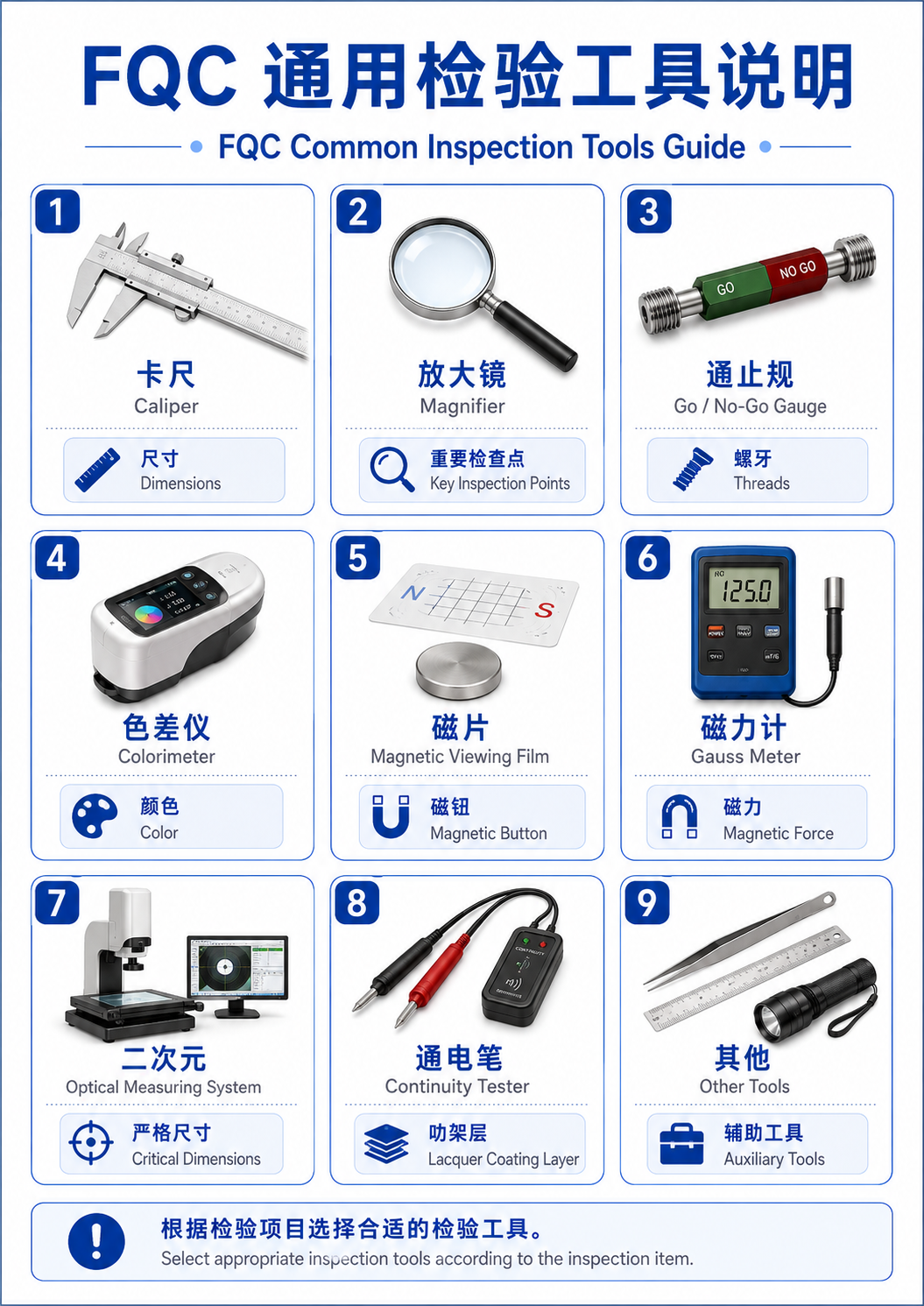
Section titled “2. Inspect with suitable tools”Follow the product SOP for appearance, dimensions, function, finish and packing. Use calibrated tools suited to the characteristic. A colour check, a size check and a magnetic-force check need different methods.
3. Record and decide
Section titled “3. Record and decide”Record the actual result, defect location, quantity and supporting evidence. If the lot fails, identify and segregate it before sorting, rework, concession review or rejection. Reworked material requires a new inspection linked to the original finding.
4. Release only when complete
Section titled “4. Release only when complete”Release the lot when the sampling acceptance criteria are met, critical items are confirmed, quantities and packing agree, reports are present and open issues have documented decisions. Retain the report so another person can understand what was checked, the quantity inspected and who made the decision.
Product-specific guides
Section titled “Product-specific guides”Locks and chains · Buckles and rings · Small metal parts · Liquor packaging hardware
The image sheets below show the general route and common tools. The approved plan and critical-item rules always govern.