
Turning
Turning removes material from rotating brass, iron or steel stock to create round, stepped, threaded or grooved components. It is a practical method for screws, nipple studs and other small parts whose functional dimensions are as important as their surface finish.
Automatic-lathe production
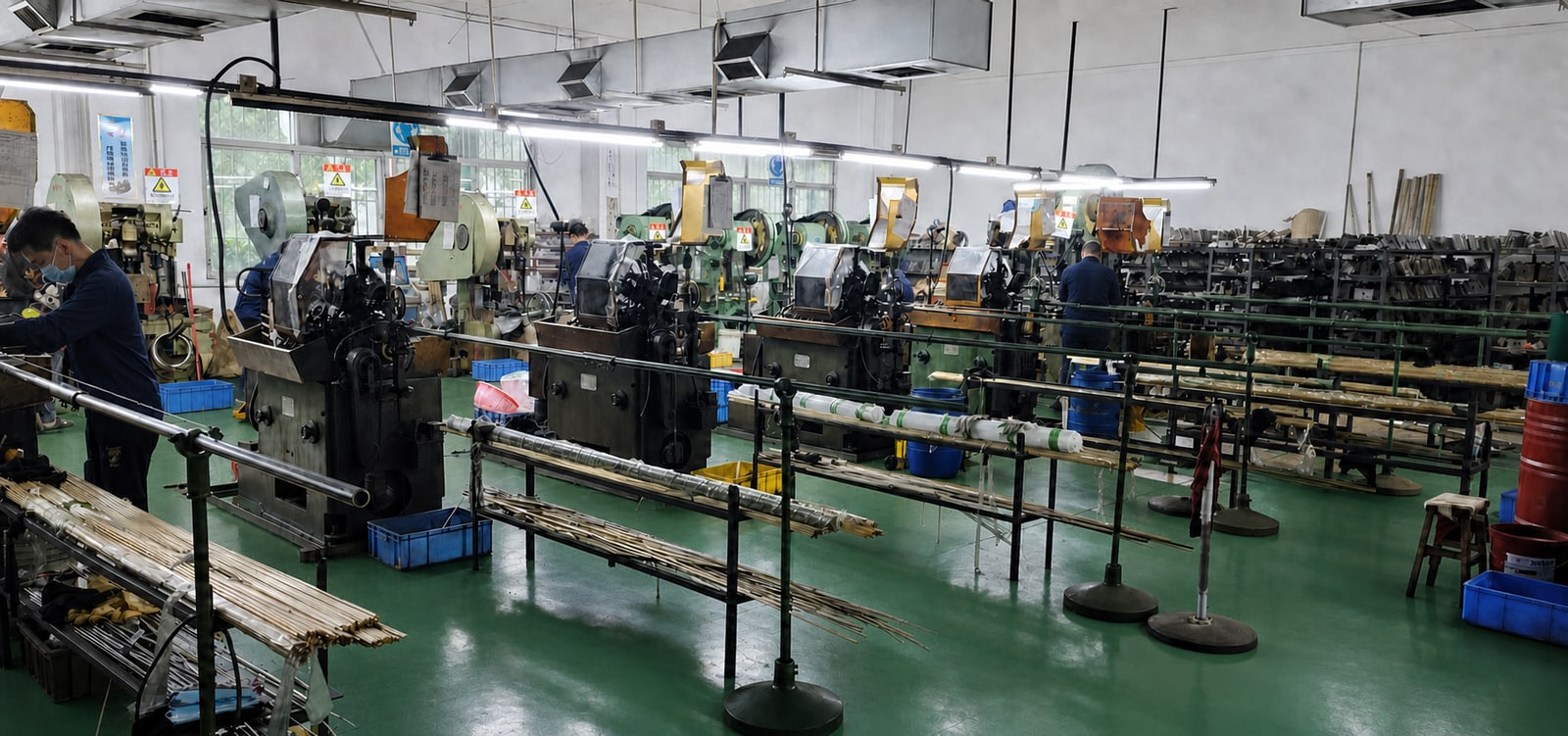
Section titled “Automatic-lathe production”An automatic lathe can repeatedly feed stock automatically and perform the specified turning, drilling, threading, parting and transfer operations. Select the process according to the material, diameter, length, tolerances, thread or groove details and required production volume.
CNC turning for refined features
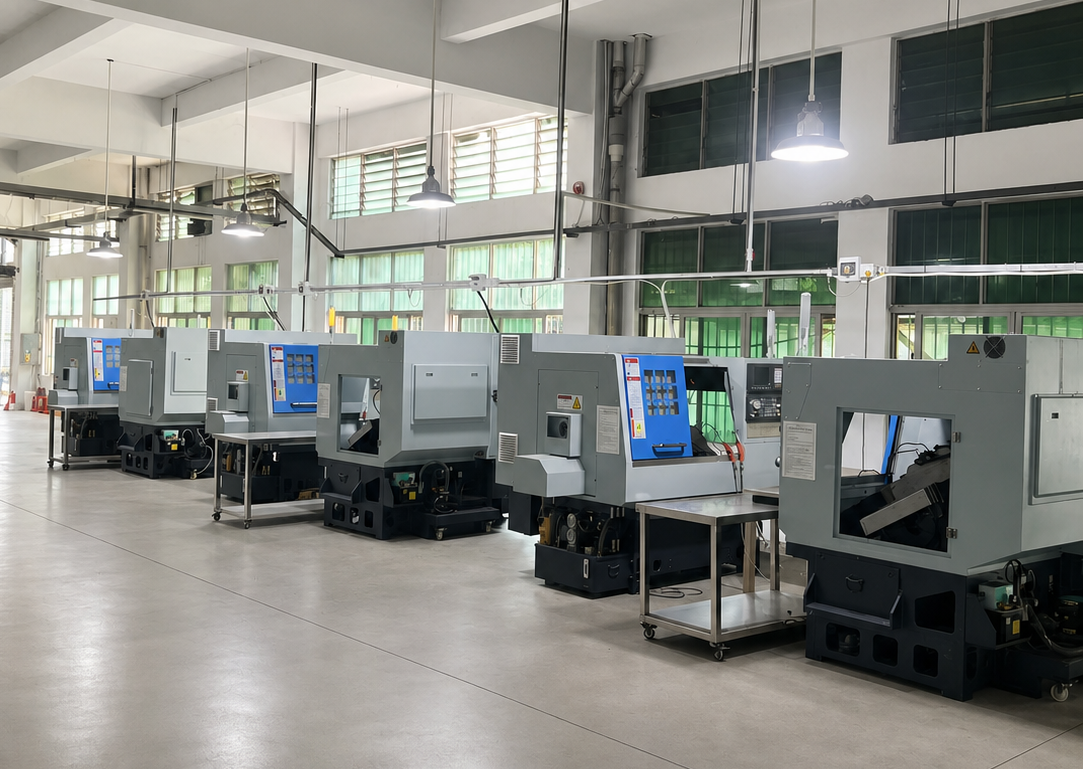
Section titled “CNC turning for refined features”A CNC lathe uses a programmed control system to coordinate the tool and workpiece. Compared with a conventional or automatic lathe, it is well suited to repeatable precision, more complex profiles and combined turning operations. It can produce internal and external cylindrical surfaces, tapers, turned contours and threads. Select the method by considering the material, workholding, critical tolerances, tool access and required volume—not by machine name alone.
Inspect the working features
Section titled “Inspect the working features”Check the diameter, length, thread or groove geometry, burr condition and fit with the mating part. Functional components should be approved in the final assembly, where plating thickness, lubrication and tightening or riveting force can affect the result.
Related terms
Section titled “Related terms”Brass · Stainless steel · Hardware structures · Inspection and testing