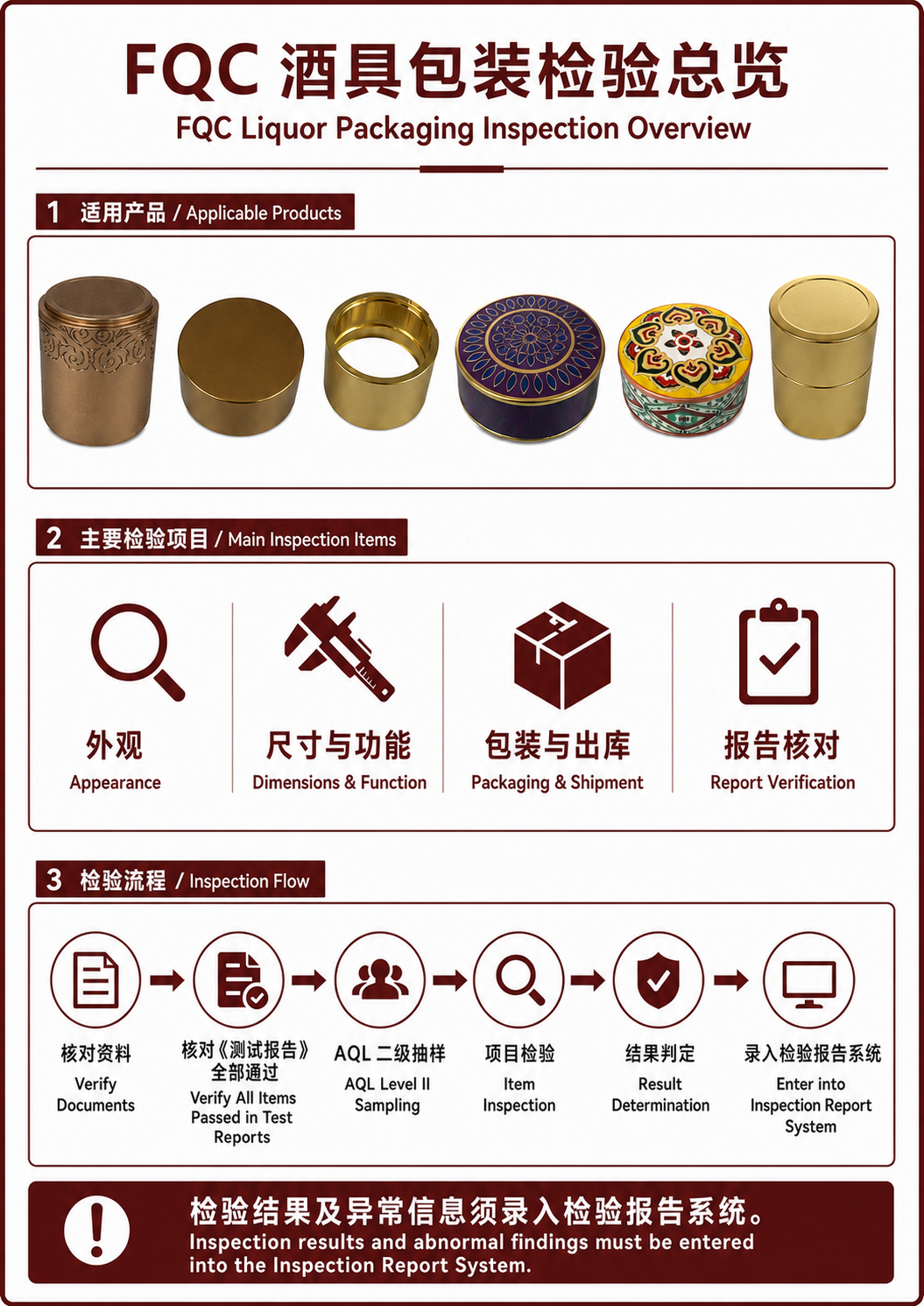
Liquor Packaging Hardware Inspection SOP
This page explains how to inspect decorative metal parts used on liquor packaging. The inspection covers appearance, fit and secure closure retention; it is not a substitute for the approved drawing or master sample. If a discrepancy is found, isolate the lot before measuring or packing.
Find a problem and contain it first
Section titled “Find a problem and contain it first”Stop packing, mark the batch and affected quantity, and separate the suspect parts. Then compare the artwork, drawing and physical master sample before deciding on rework or another disposition.
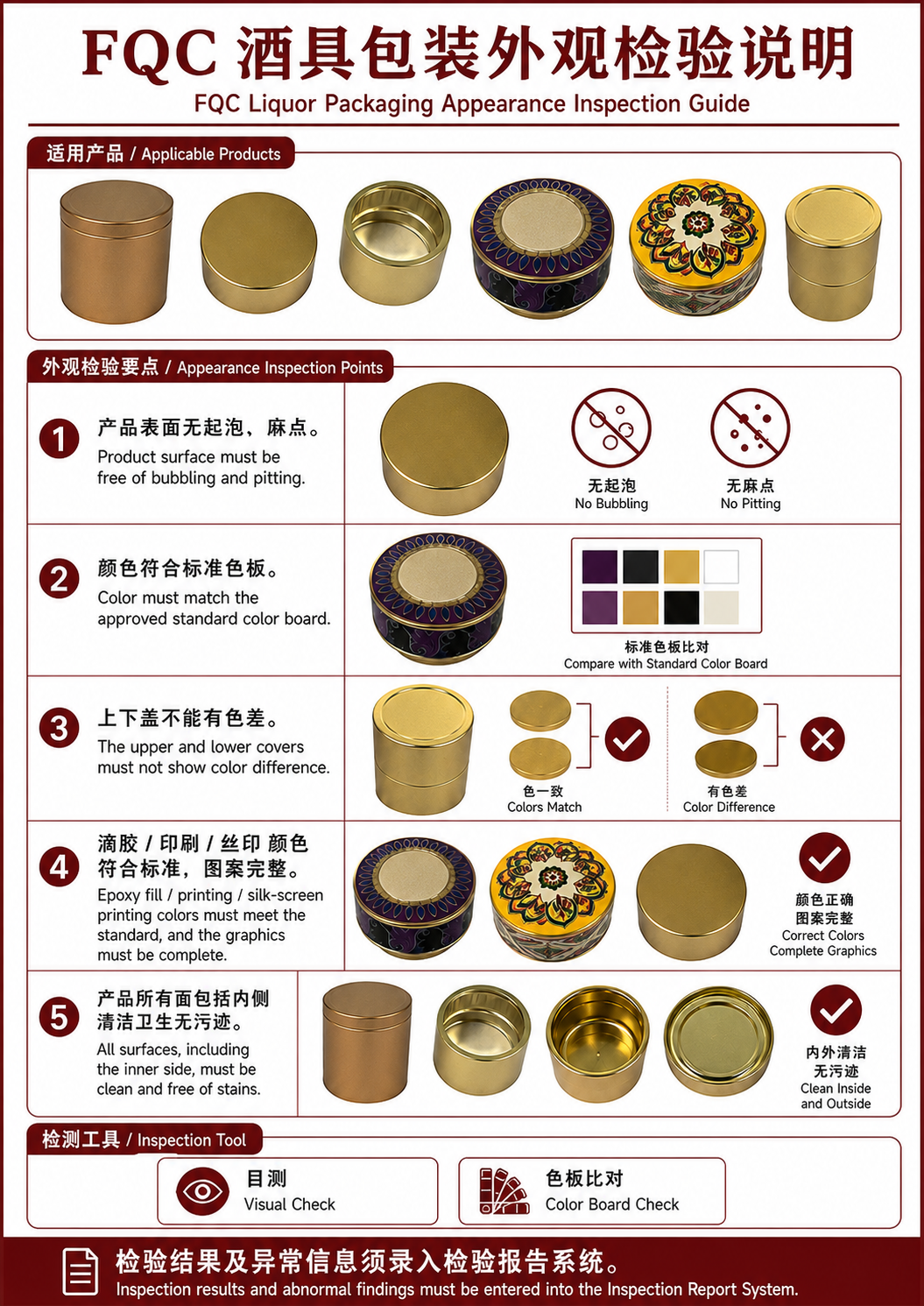
Appearance and decoration
Section titled “Appearance and decoration”Inspect all outer and inner surfaces for blistering, pitting, stains, contamination and handling damage. Compare colour, gloss and upper/lower component matching with the approved sample. Printing, epoxy fill and decoration must be complete, correctly positioned and consistent with the approved artwork.
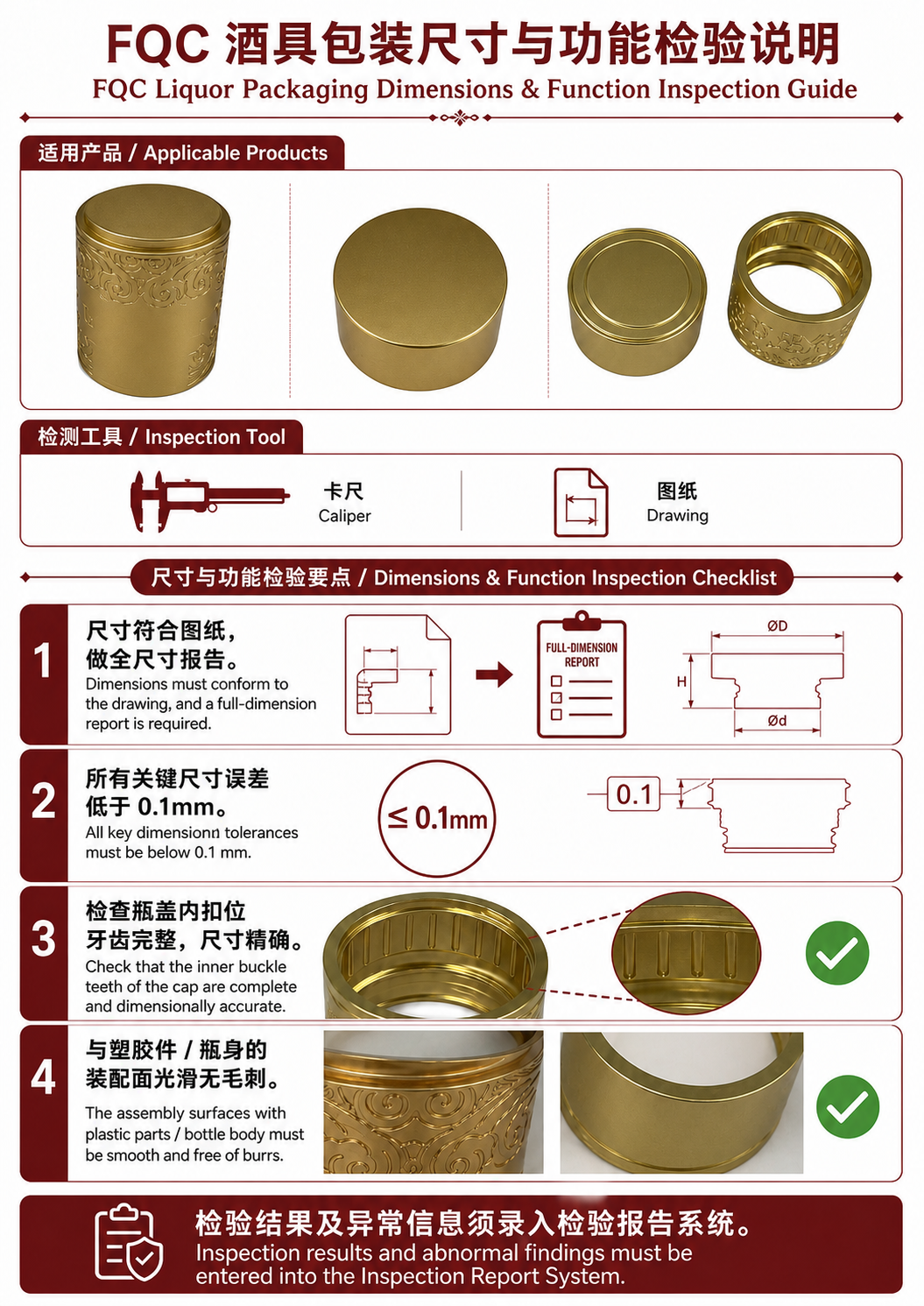
Dimensions and assembly function
Section titled “Dimensions and assembly function”Measure all specified critical dimensions and retain the required report. Check the internal teeth or retention features, assembly-face smoothness, risk of burrs and fit with the mating plastic or bottle component. Confirm closing, retention and removal behaviour using the agreed method.
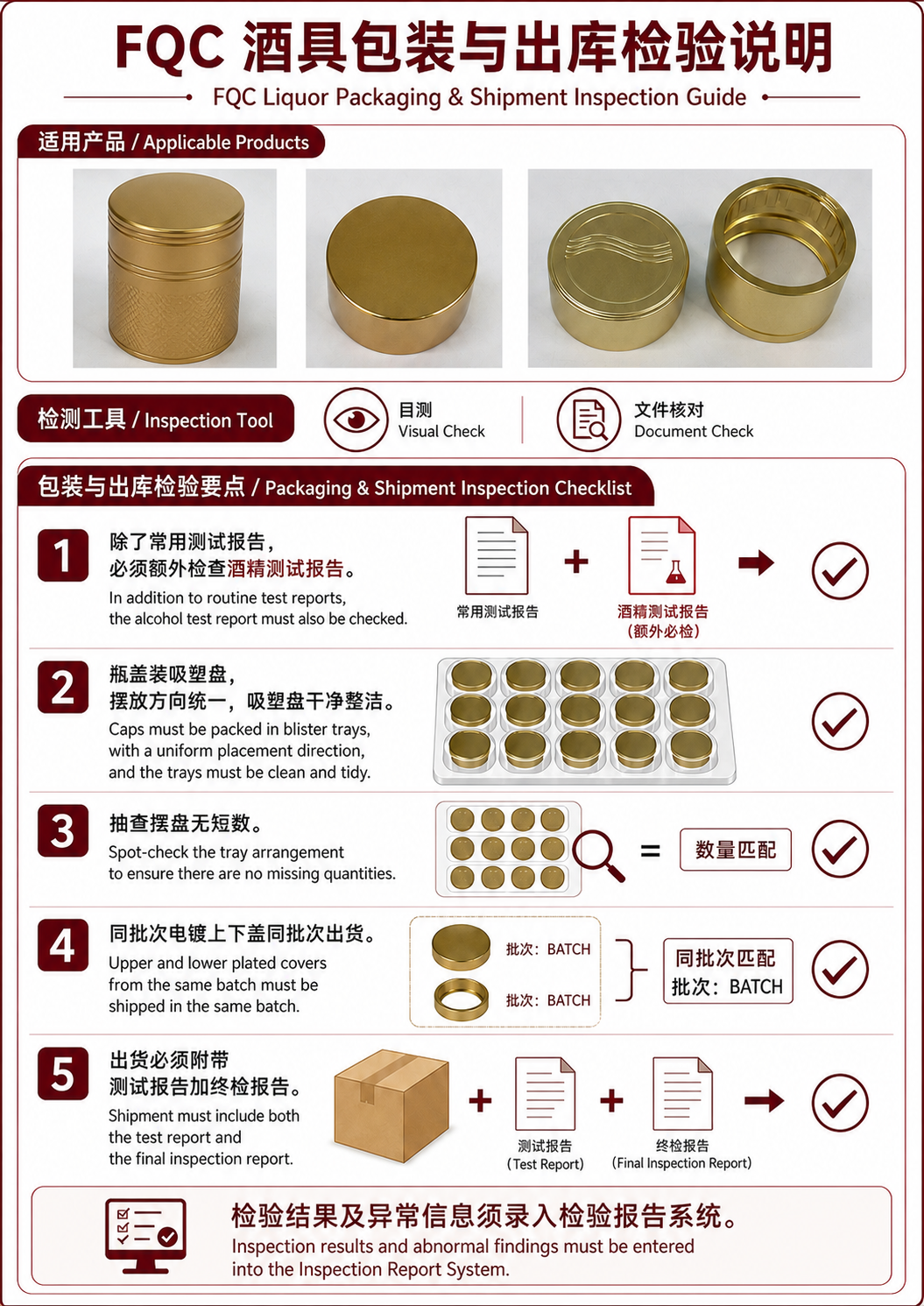
Packaging and shipment
Section titled “Packaging and shipment”Verify the required test reports, batch matching between paired plated parts, tray orientation, cleanliness and quantity. Shipment records should include the final inspection result and the applicable test evidence.
SOP image sheets
Section titled “SOP image sheets”