Locks and Chains Inspection SOP
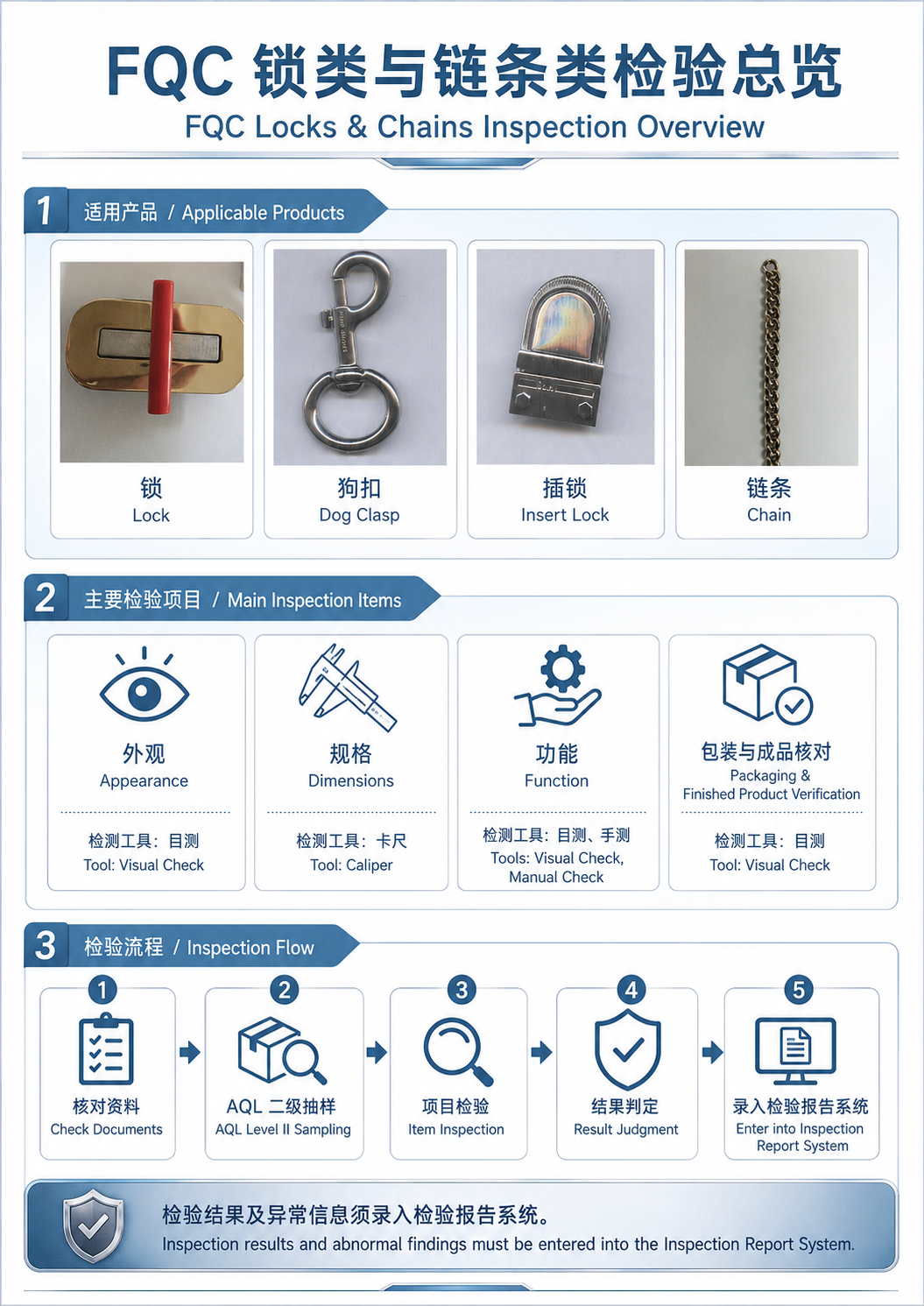
This page explains how to inspect locks, clasps and chain assemblies before packing. An acceptable part meets the appearance requirements, fits its mating component, operates safely and is packed to prevent damage. If a defect is found, separate the affected lot before continuing.
Find a problem and contain it first
Section titled “Find a problem and contain it first”Hold the material and identify the batch, part and quantity. Separate the suspect pieces, then compare them with the approved drawing and physical sample before deciding on the disposition.
Appearance and finish
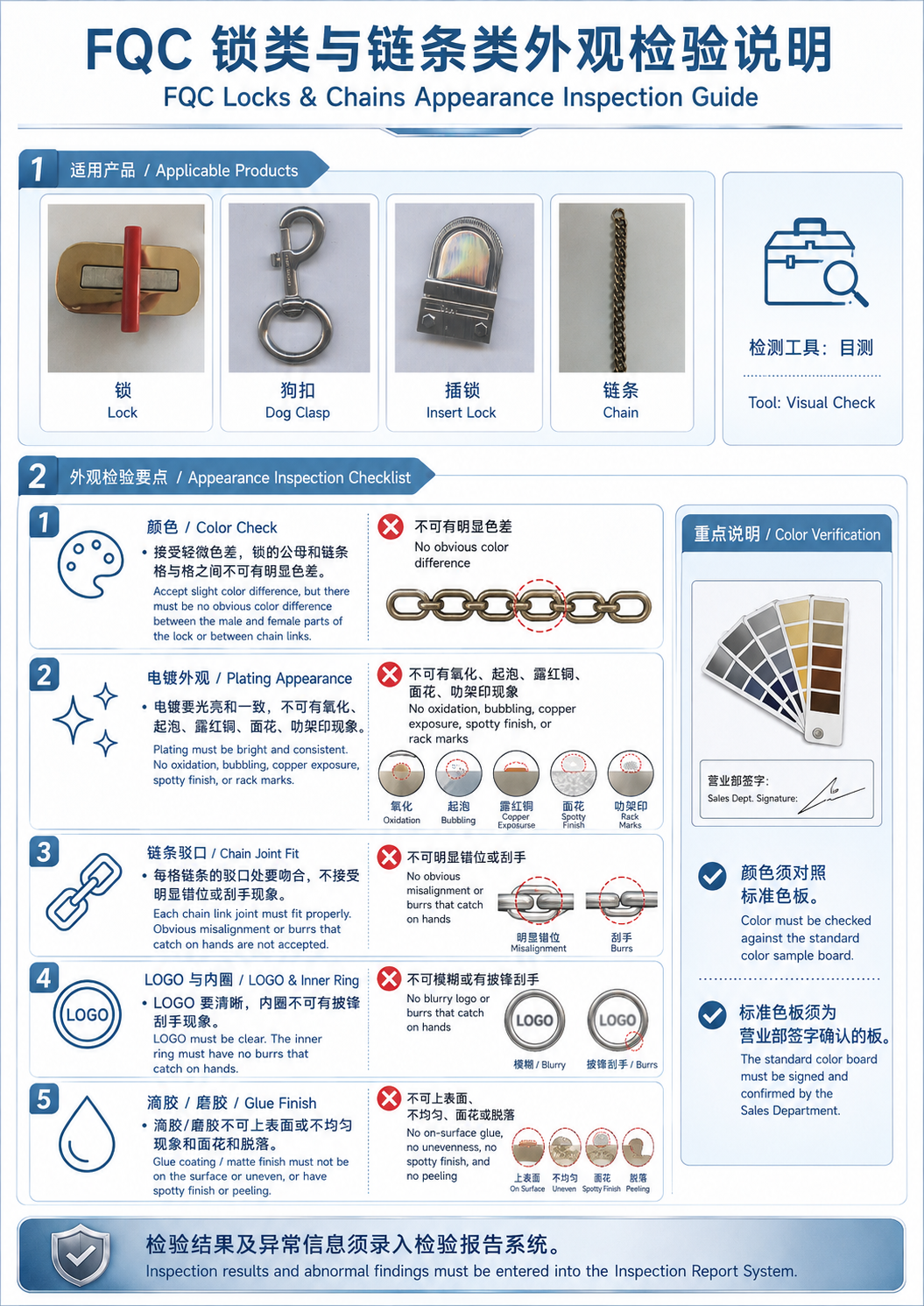
Section titled “Appearance and finish”Compare the colour and gloss with the approved sample. Check the plating coverage, oxidation, blistering, exposed undercoat, pitting, rack marks and handling damage. Chain joints, inner rings and edges must be free from burrs that could scratch or cut a user’s hand; logos and decorative fill should be clear and complete.
Dimensions and matching
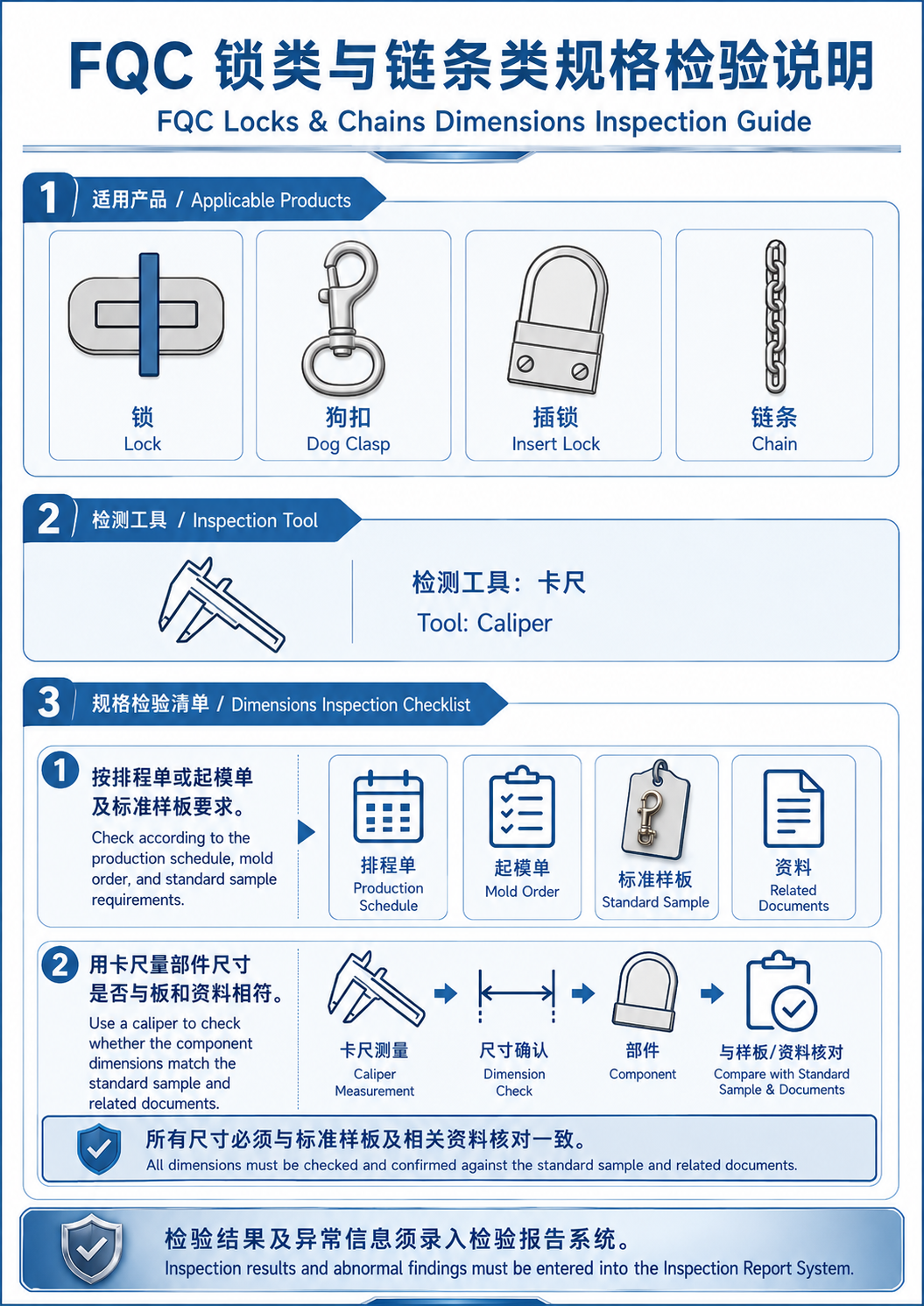
Section titled “Dimensions and matching”Measure defined dimensions from the stated datum and compare them with the drawing and sample. Check chain pitch or joint fit, lock body and insert matching, screw-hole compatibility and any assembly clearance that affects operation.
Function and trial assembly
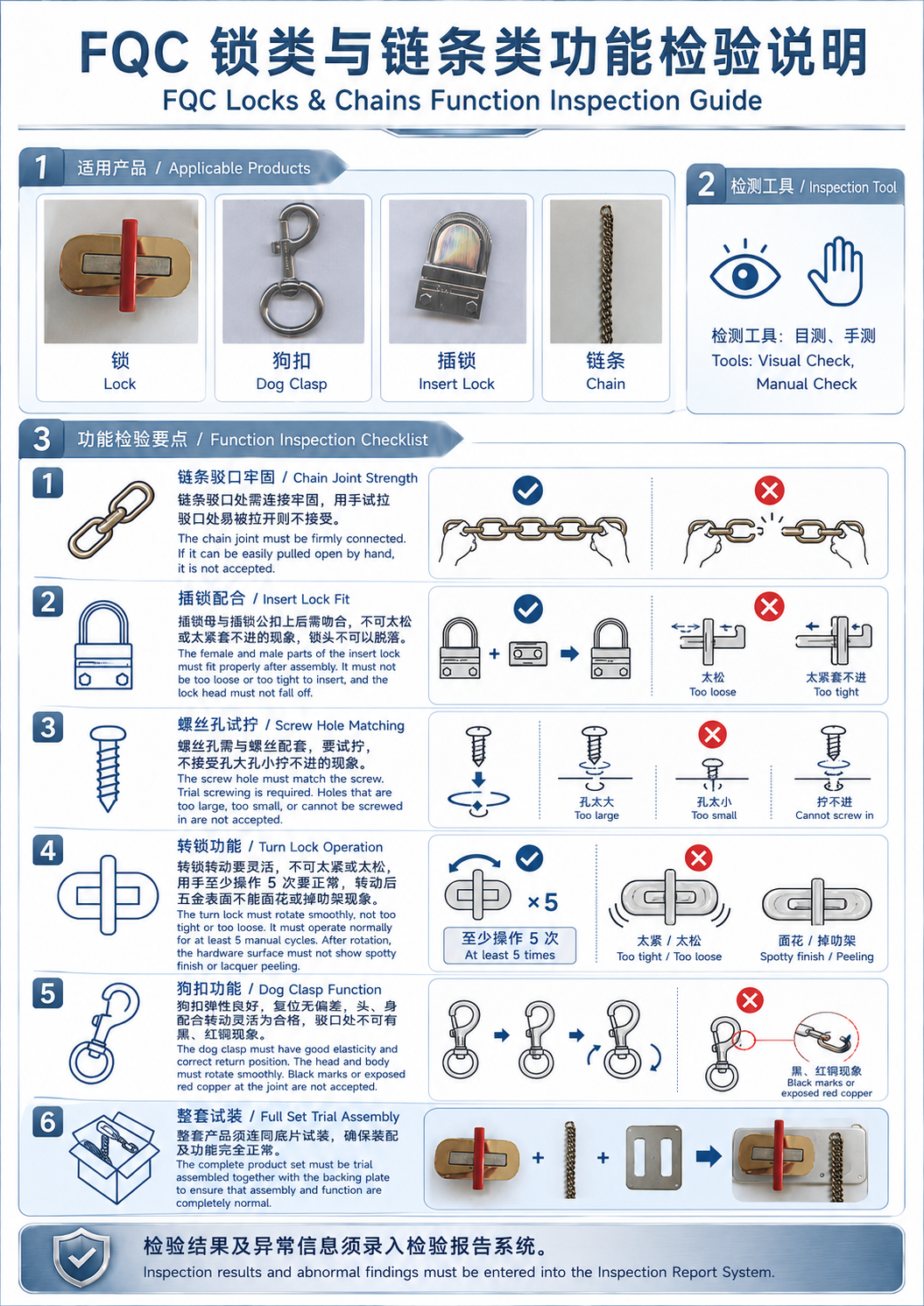
Section titled “Function and trial assembly”Check that chain joints cannot be separated by normal hand force, lock parts assemble without excessive play or binding, and moving parts operate smoothly. Cycle the applicable locks or clasps repeatedly and trial-assemble the complete set with its mating parts.
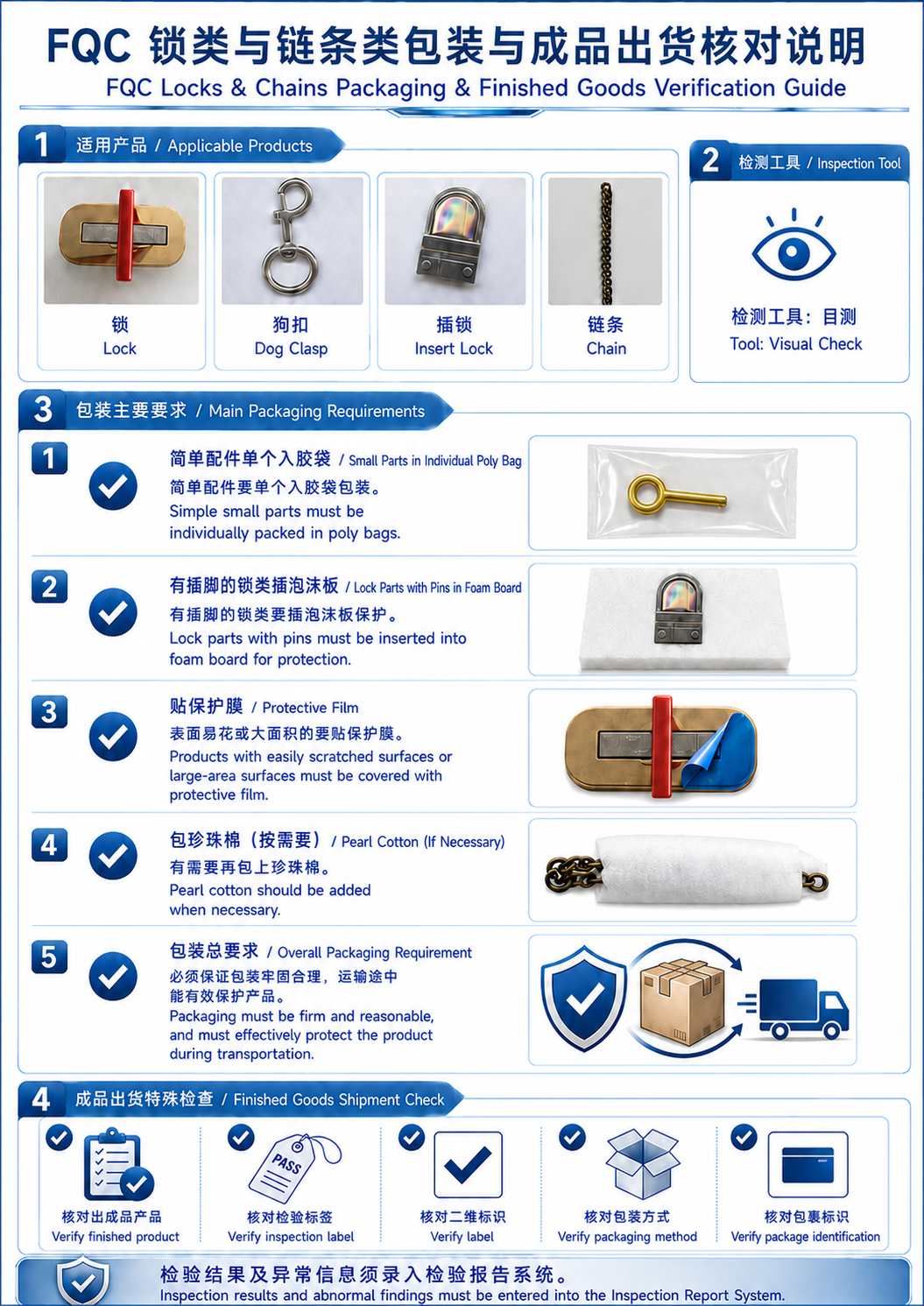
Packaging and release
Section titled “Packaging and release”Protect large or scratch-sensitive surfaces with the specified film or cushioning. Verify the complete set, quantity, identification and packing method before release, then record any abnormal result.
SOP image sheets
Section titled “SOP image sheets”