
Die Casting
Die casting forms molten metal in a precision steel die under pressure. For zinc alloy, it can produce repeatable small hardware with detailed profiles, lettering and mounting features.
Product and die review before tooling
Section titled “Product and die review before tooling”Review the draft, wall thickness, undercuts, parting line, gate position, ejection and expected finish. These choices affect appearance, dimensional control, trimming and the difficulty of later changes. Complex free-form parts may justify a dedicated die set, while conventional bag hardware can often use removable inserts in a shared die frame; see production die strategies.
The tooling review should also reserve interfaces for non-standard screws, rivets, springs and magnets. These items may be developed in parallel with the body, and a late change to their envelope can delay assembly validation after the first trial.
From molten alloy to a stable casting
Section titled “From molten alloy to a stable casting”The route includes alloy and die preparation, injection, cooling and ejection, trimming, casting inspection and downstream processing. Pressure, temperature, filling and venting conditions can affect incomplete fill, cold-flow marks, porosity, flash and dimensional stability. The production window therefore needs to be established around the actual part and die rather than machine settings alone.
A clear drawing, approved sample and agreed acceptance criteria help distinguish between cosmetic and functional requirements. Bright electroplating can emphasise substrate defects, so the cast surface should also be reviewed against the available tumbling and polishing operations.
Die-casting equipment and production routes
Section titled “Die-casting equipment and production routes”The machine is selected according to the alloy, part size, die design and volume—not only its nominal tonnage. Zinc-alloy production commonly uses a hot-chamber route. Brass and aluminium generally use a cold-chamber route, in which molten metal is transferred to the shot system for each cycle.
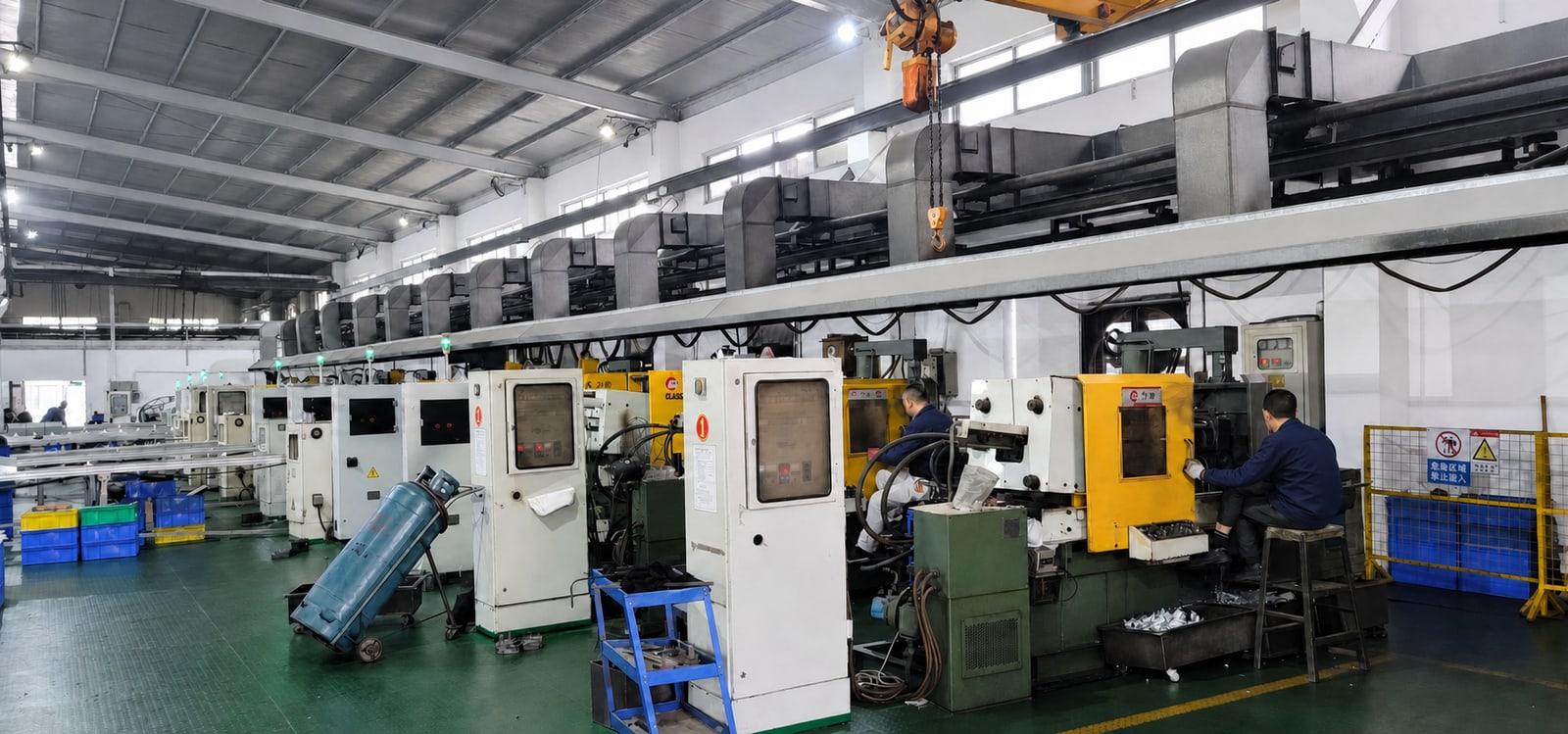
For brass or aluminium castings, a larger cold-chamber machine can support larger hardware and decorative pieces where a higher clamping force is needed.
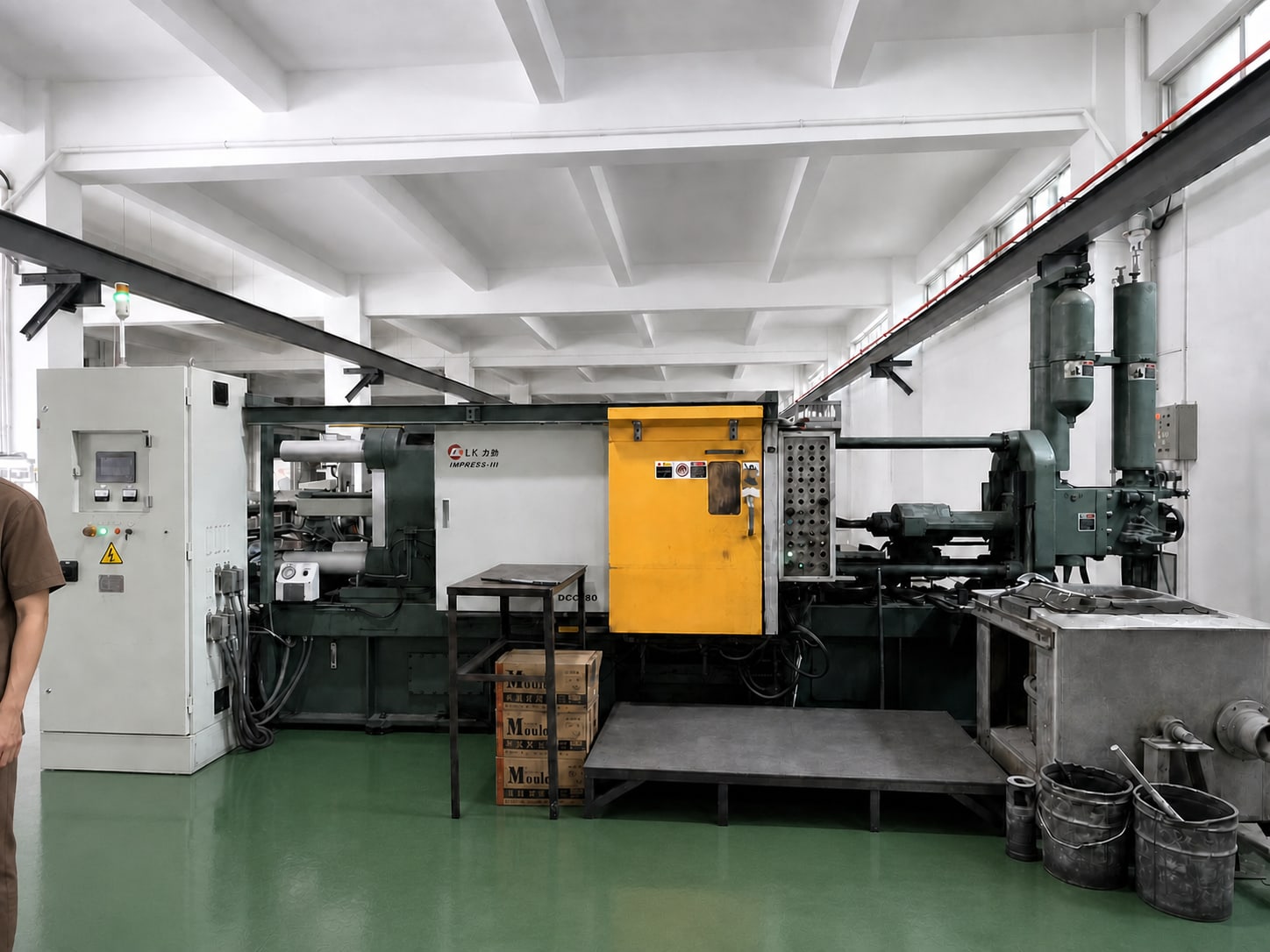
A 30-ton press can produce small fittings efficiently when the part and die suit its shot capacity and clamping force.
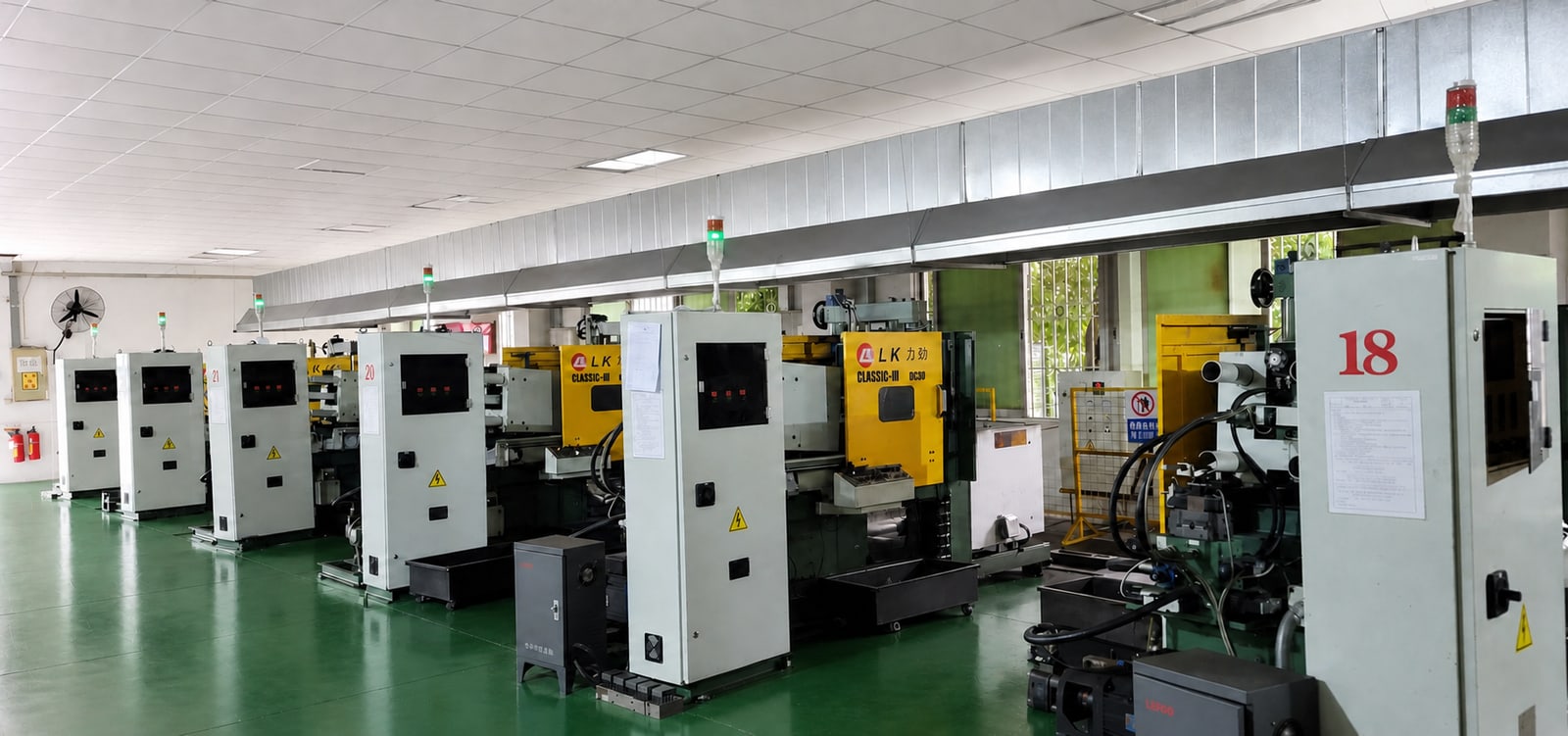
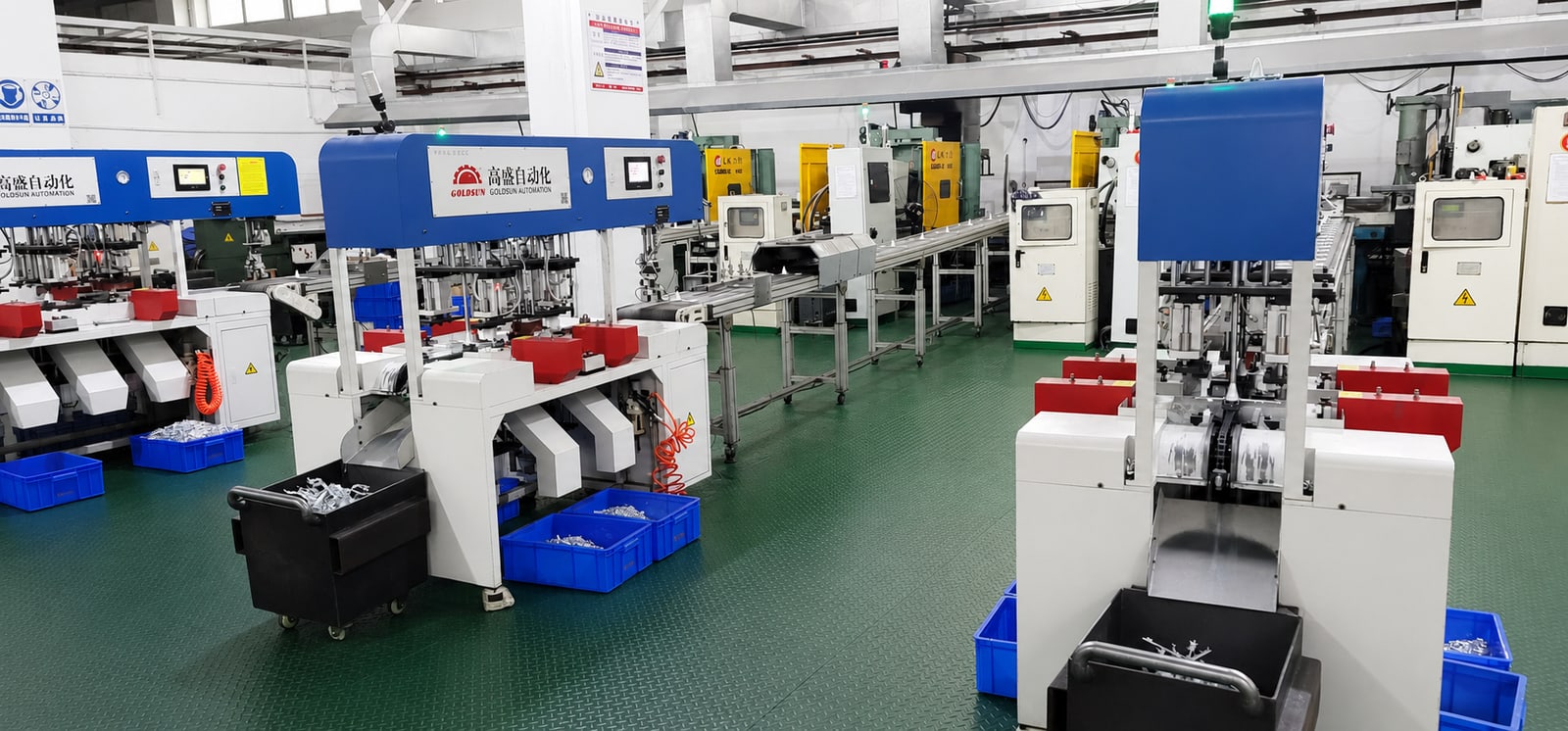
For consistent, high-volume programmes, an automated cell can link feeding, die casting, part removal and routine handling, so an operator does not need to remain at the machine throughout each cycle. Setup, first-piece approval, maintenance, safety and quality checks still require trained oversight.
Related terms
Section titled “Related terms”Zinc alloy · Brass · Aluminium alloy · Deburring · Production tooling · Grinding and polishing · Basic inspection